Today I received a New Listing announcement from an agent that showcased the property with a single, up-close photo of a shower. A shower. Not a lovely shower. Not a special, high-tech, tricked-out shower. Not a shower with a window looking onto a beautifully landscaped scene. Just your average tile shower with a generic shower head.
“Come on!” I said to my sleeping dog, “Is she kidding me?”
Now, if a potential buyer spent the past three months trekking the Pacific Crest Trail, and had had their fill of minimal facilities, and said: “By golly, I’m tired of living in a tent, cleaning myself with wet-naps! I want to buy a house with indoor plumbing! Show me what you’ve got,” then this ad would have value. But…
So, here are a few words about professional photography.
The number one goal when photographing a home for sale is to capture a sample of the main rooms and the features of the home -- just enough images to entice potential buyers to come take a look in person. And those photos must be pleasing to the eye: well-lit, in focus, in perspective, and uploaded to the internet with the appropriate dpi to reach the viewer’s eyes blur-free. These images are powerful marketing tools that attract buyers and help ensure that you capture top dollar for the sale of the home.
With the internet bringing real estate listing photos to buyers through direct emails, the MLS, and all the third-party outlets like Trulia, Zillow, Redfin, and Realtor.com, it has never been more important to have professional photographs taken to advertise the features of a property.
It’s true that your new iPhone can take some great photos, but they are not good enough for the purpose of selling real estate.
First, a professional photographer has the appropriate lens to capture a room without distorting it and making it look like the inside of a fishbowl.
A professional photographer knows lighting and brings the appropriate supplemental lighting to work with natural light and existing fixtures to open up the room and present it fully
Real estate photographers find the appropriate approach and angle to capture a room, so viewers feel they are within that space. They are discerning about what should and should not be shown, and make the necessary corrections such as removing clutter, closing the door on distracting adjacent rooms, and lowering the lid on the toilet. They focus on the property, not the furniture.
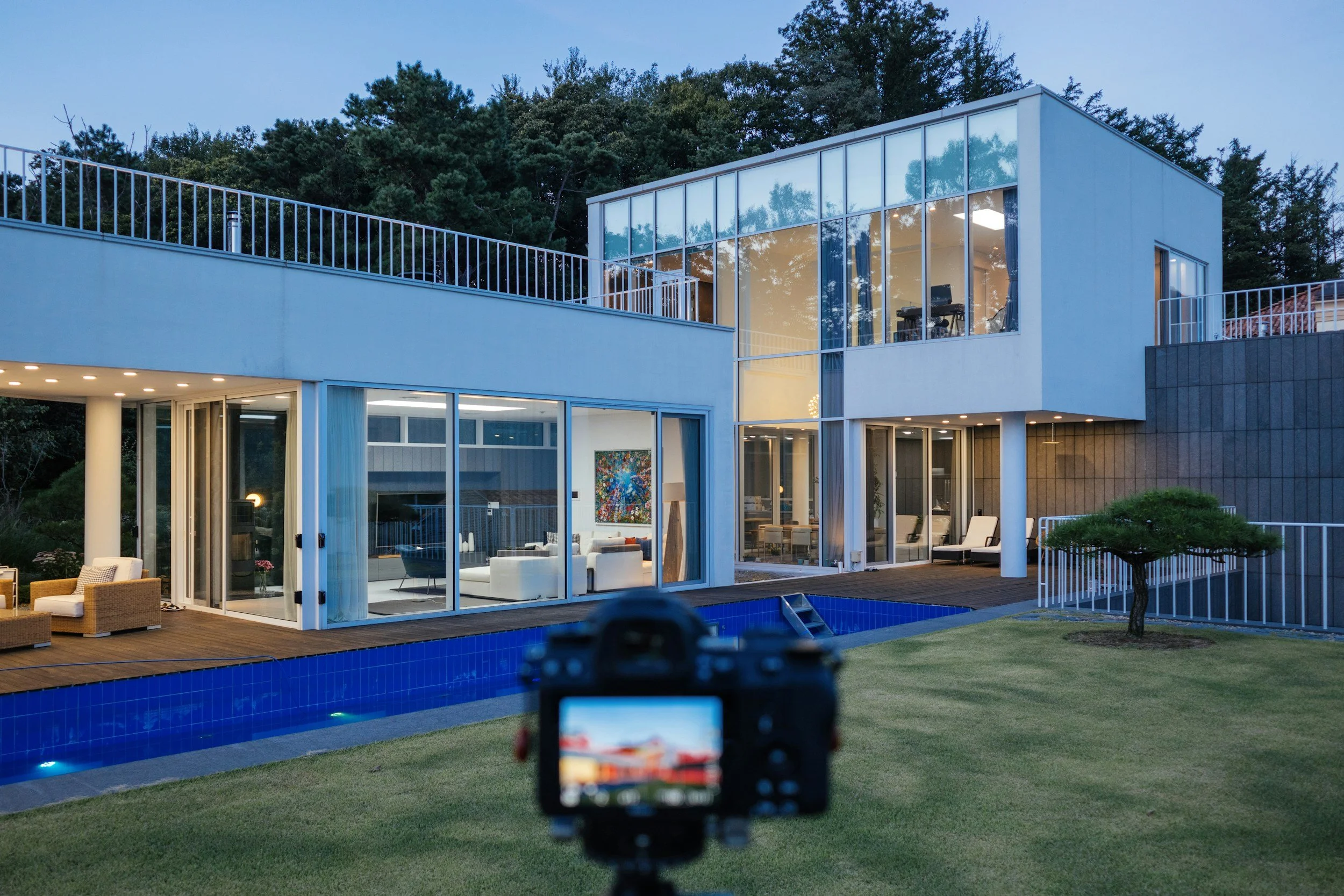
Pro photographers keep in mind that a home can take on an altogether different feel when day turns to night. They capture the exterior of the property, well-lit with interior and landscaping lights. They capture the best views from within, day and night. A home with a view of city lights or ocean swells brings a much higher price; it’s important to show what the home offers.
Additionally, you have the option of video. Real estate drone videos are becoming more common for larger homes. They can capture the circumference of the property, take in the views, and show the expanse of the property. Images from drones can be uploaded directly to the internet as a video, plus still photos can be culled from the video for placing in the MLS listing.
Once the photography is done, the photographer’s job isn’t. Professional photographers then set about cropping the images to train the eye to best see the home. They adjust the resolution and provide your real estate agent with separate batches of images – one batch that works best for print, one that works best for the internet.
At this point, it becomes your real estate agent’s job to choose the best photos and to upload no more than 20 images to the internet. Less is more -- this ensures that agents and buyers can flip through, and get a sense of the home without being bogged down with page after page of redundant photos. And, one last thing, hopefully your agent has the good sense to check and re-check the images he or she has loaded to the internet. There’s nothing more frustrating than trying to look at a photo of a home that is loaded upside-down or sideways.
Real estate photographers charge shockingly little for their services, so it doesn’t make financial sense not to go with a pro.